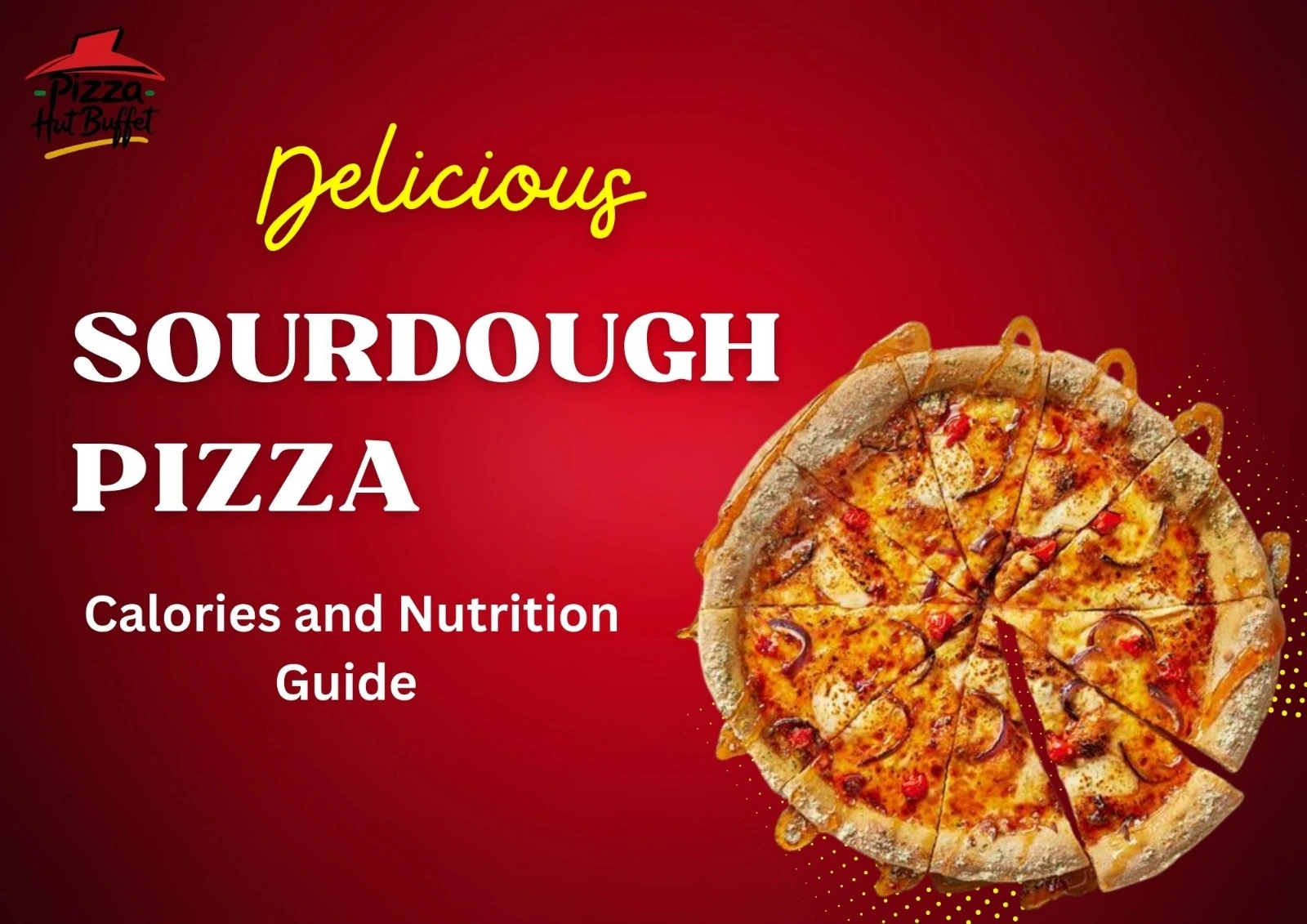
Depending on the size and toppings, Pizza Hut’s sourdough pizza has between 118 and 207 calories per slice, along with 14–19g of carbs, 5–10g of protein, and 4–12g of fat per serving. While meat-heavy options like Pepperoni Feast or Super Supreme have more fat and calories, vegetable-based options like Margherita typically have fewer calories. Overall, it offers moderate calories and a balanced macronutrient profile for an occasional indulgence, though the precise nutrition may change based on portion size and particular toppings selected.
Table of Contents
- What Makes the Sourdough Crust Different?
- Calories Breakdown by Pizza Type
- Macronutrient Profile
- Side Dishes and Their Impact on Calories
- Portion Control and Smart Eating
- Is It Suitable for Weight Management?
- Sodium and Fat Considerations
- Nutritional Snapshot Table
- Balanced Eating Perspective
- Conclusion
- FAQs
What Makes the Sourdough Crust Different?
Sourdough crust is naturally fermented, in contrast to regular pizza dough. It consequently acquires an airy texture and a faintly tangy flavor. For some people, the fermentation process may also increase digestibility.
However, when portion size is equal, the calorie content stays comparable to regular crust even though fermentation alters texture and flavor. Therefore, rather than drastically reducing calories, choosing sourdough at Pizza Hut UK is primarily based on flavor preference. Furthermore, fermentation does not considerably lower the total calorie content, though it may have a minor impact on the breakdown of carbohydrates.
Calories Breakdown by Pizza Type
Calories vary depending on toppings and size. Below is an estimated breakdown per slice based on available UK nutrition data.
Estimated Calories Per Slice
| Pizza Type | Small | Medium | Large |
| Margherita | 127 kcal | 140–150 kcal | 160 kcal |
| Farmhouse | 118 kcal | 133 kcal | 155 kcal |
| Pepperoni Feast | 150–160 kcal | 179 kcal | 207 kcal |
| Super Supreme | 170–180 kcal | 190 kcal | 204 kcal |
| Chicken Sizzler | 130–140 kcal | 145 kcal | 152 kcal |
As illustrated above, the options that are vegetables are relatively lower in calories. Meat-based pizzas, in contrast, have higher amounts of fa,t which contribute to the overall caloric content. Pepperoni Feast has more fat content since it is made of processed meat, but Margherita is one of the lighter options.
Macronutrient Profile
Understanding macronutrients helps you make informed dietary decisions. Each slice of Sourdough Pizza by Pizza Hut typically includes three main macronutrients:
- Carbohydrates: Each slice contains around 14g to 19g of carbohydrates. Most of these come from the crust.
- Protein: levels range between 5g and 10g per slice. Meat toppings naturally increase protein content.
- Fat: ranges from 4g to 12g per slice, depending on the cheese and toppings. Therefore, double cheese or pepperoni increases calorie density significantly. Overall, calorie differences are mainly influenced by fat content rather than carbohydrates alone.
Side Dishes and Their Impact on Calories
While pizza is the main highlight, side dishes can significantly increase total calorie intake. Therefore, choosing sides wisely is extremely important.
Estimated Calories of Common Sides
| Side Dish | Estimated Calories |
| Garlic Bread (2 pieces) | 250–300 kcal |
| Cheesy Garlic Bread | 350–400 kcal |
| Fries (Regular) | 300–350 kcal |
| Onion Rings | 280–350 kcal |
| Mozzarella Sticks | 400+ kcal |
| Coleslaw | 150–200 kcal |
| Side Salad (Light Dressing) | 60–100 kcal |
Sides made of fried and cheese are high in calories, as seen above. Conversely, more light substitutes like salad are also a source of fiber and nutrients, but do not raise the energy consumption significantly. Furthermore, creamy dips may also contribute to the number of 100-200 calories with no noise. This is why it is wiser to ask to get sauces served separately.
Smart Side Choices
- Choose salad instead of fries
- Avoid extra cheese sides
- Share heavier sides
- Limit creamy dips
Consequently, being mindful of side dishes helps maintain overall calorie balance.
Portion Control and Smart Eating
Even moderate-calorie slices can add up quickly if consumed in large quantities. Therefore, portion control plays a crucial role.
For instance:
- 2 slices ≈ 300–400 calories
- 3 slices ≈ 450–600 calories
- 4 slices ≈ 600–800+ calories
Thus, limiting intake to 2–3 slices can help maintain calorie control, especially when paired with lighter sides. Furthermore, eating slowly and drinking water between bites can improve satiety and prevent overeating.
Is It Suitable for Weight Management?
The question that many people would have is whether or not Sourdough Pizza by Pizza Hut can be implemented in a weight-loss or a calorie-controlled program. The answer to this is yes, and moderation is important. To begin with, the diet is moderate in per-slice calories. Second, the amount of protein promotes fullness. Nonetheless, excess consumption or combination with foods rich in energy can force the overall consumption above the daily guidelines.
If you are managing weight:
- Stick to smaller portions
- Avoid stuffed crust options
- Skip sugary beverages
- Choose vegetable toppings
As a result, pizza can still be enjoyed responsibly within a balanced lifestyle.
Sodium and Fat Considerations
Other factors besides the calories include sodium content. Meats and cheeses are processed making it high in salt. Excess sodium can also help in the retention of water and high blood pressure. Moreover, the content of saturated fats is higher in meat-intensive ones. Thus, people keeping an eye on the health of their hearts should choose light toppings. In spite of the fact that occasional consumption is quite acceptable, frequent high-sodium meals should be minimized.
Nutritional Snapshot Table
These values may vary slightly depending on portion size, specific toppings, and restaurant preparation methods.
| Nutrient | Approximate Range |
| Calories | 118 – 207 kcal |
| Carbohydrates | 14g – 19g |
| Protein | 5g – 10g |
| Fat | 4g – 12g |
| Sodium | Moderate to High |
This clearly shows that topping choice significantly impacts overall nutrition.
Balanced Eating Perspective
Notably, the overall health is not determined by one particular food. Rather, your daily consumption is more important. Provided that you balance the rest of the day, say, having lighter meals some time before, or after, having Sourdough Pizza by Pizza Hut here, and there does not interfere with a healthy lifestyle. Hence, conscious decisions and restraint are better than total prohibition.
Conclusion
Sourdough Pizza by Pizza Hut contains between 118 and 207 calories per slice, depending on toppings and size. Carbohydrates range from 14g to 19g, protein from 5g to 10g, and fat from 4g to 12g per serving. While it is not considered a low-calorie food, it can absolutely fit into a balanced diet when consumed in moderation. Choosing lighter toppings, controlling portion sizes, and being careful with high-calorie side dishes can significantly improve the nutritional profile of your meal. Ultimately, balance, awareness, and smart ordering decisions allow you to enjoy pizza without compromising your dietary goals.
If you have any questions about Pizza Hut sourdough pizza or want more nutritional guidance, get in touch with us. We’d be happy to help you make informed and tasty choices.
FAQs
1. How many calories are in one slice?
Calories range from approximately 118 to 207 per slice, depending on toppings and size.
2. Is sourdough crust healthier than regular crust?
Sourdough fermentation may improve flavor and digestibility; however, calorie differences are minimal.
3. Which option has the lowest calories?
Margherita and vegetable-based options are generally lower in calories than meat-heavy varieties.
4. Is it high in protein?
Yes, each slice provides around 5g to 10g of protein, depending on toppings.
5. Can I eat it while dieting?
Yes, it can be included in a calorie-controlled diet if portion sizes and side dishes are managed carefully.